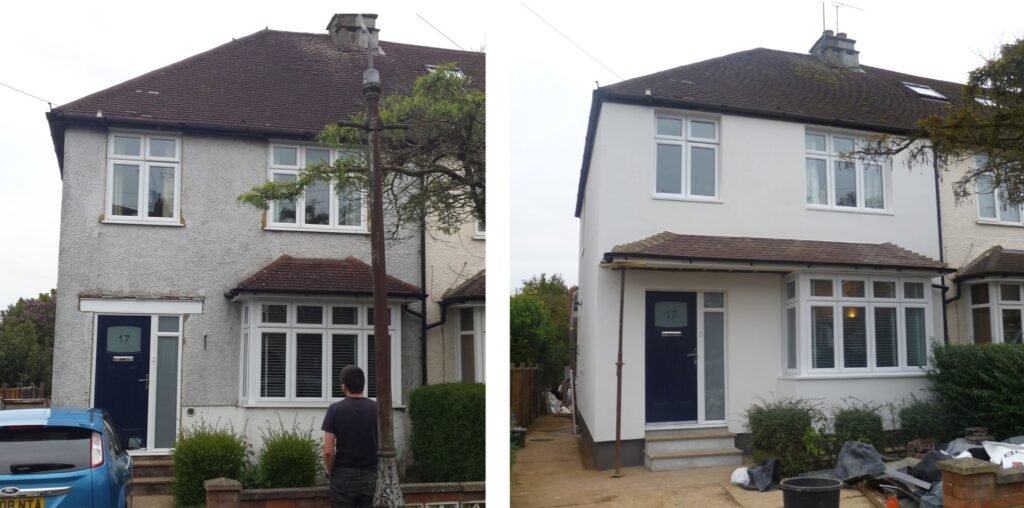
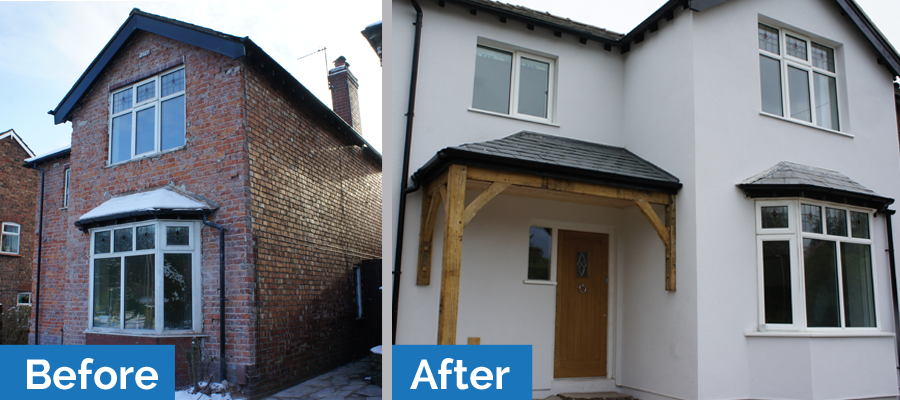
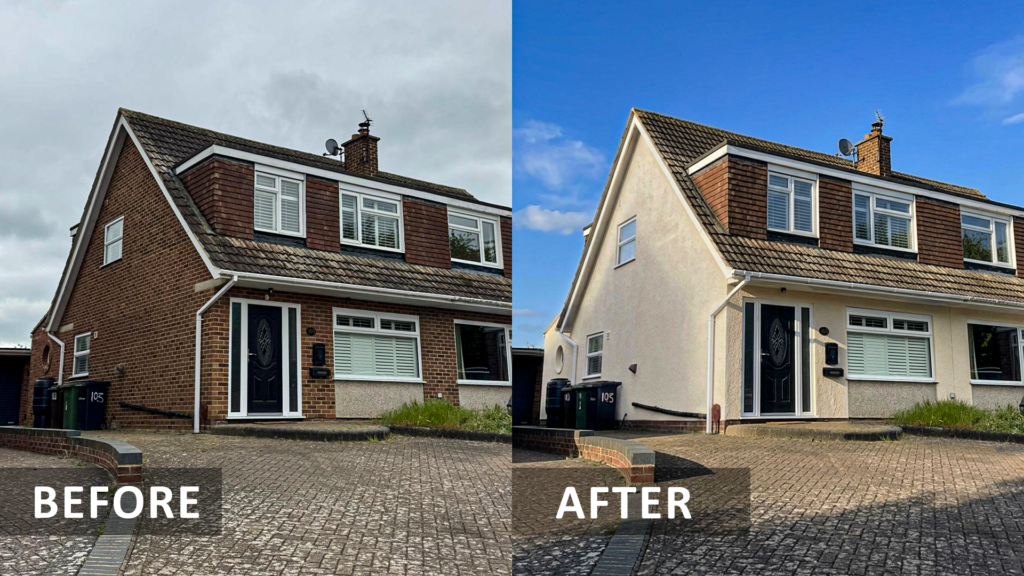
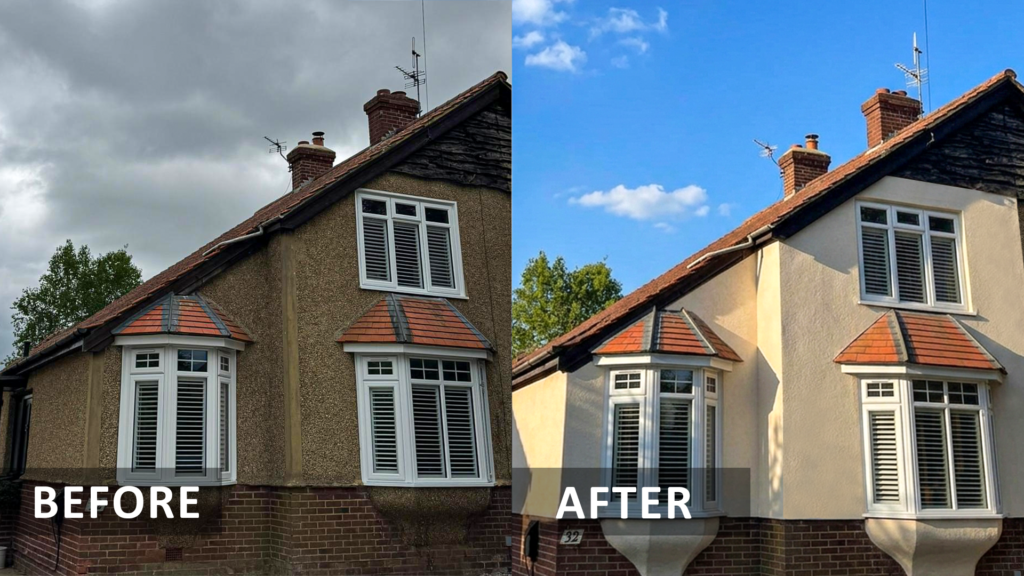
Proofshield’s insulating render and plaster systems are built on straightforward physics. This page explains how they work, what the performance figures mean in practice, and what the installation process looks like from first contact to finished wall.
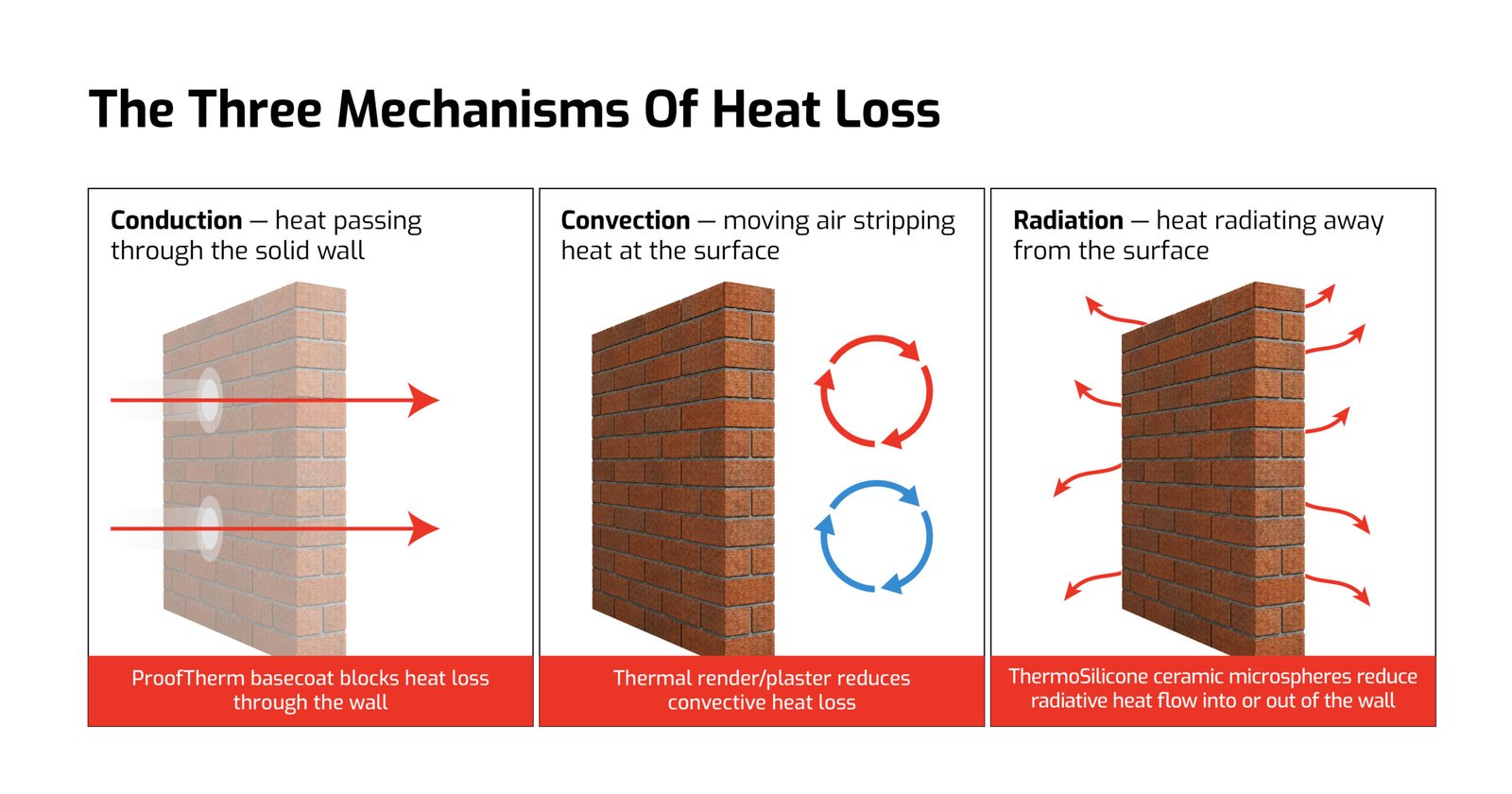
Heat loss through walls occurs because of poor thermal resistance. Uninsulated walls allow heat to travel by conduction from the warm interior to the cold exterior. The rate at which this happens is measured by the R-Value (thermal resistance) of the wall construction: the higher the R-Value, the better the insulation.
A typical single-skin masonry wall has an R-Value of around 0.18 m2K/W. This is very low — heat passes through it with almost no resistance. The ThermoSilicone system increases this to 0.738 m2K/W at the standard 20mm base coat depth — a 310% improvement.
Perlite is a naturally occurring volcanic mineral. When subjected to intense heat, it expands to form a lightweight material with a honeycomb microstructure of micro air-bubbles. This structure is what makes it thermally effective: still air is an excellent insulator, and perlite traps air within its structure at a microscopic level.
ProofTherm base coat uses expanded perlite instead of sand as its primary aggregate. Perlite has a thermal conductivity of 0.058 W/mK — far lower than sand. Applied at 20–25mm across the wall face, it creates an uninterrupted thermal barrier that significantly reduces the rate of heat conduction through the wall.
The ThermoSilicone finish coat contains ceramic microspheres — hollow, microscopic ceramic spheres — that further disrupt the path of heat transfer through the outer layer of the wall. Combined with the ProofTherm base coat, they create a system that resists heat flow at both the structural and decorative layer.
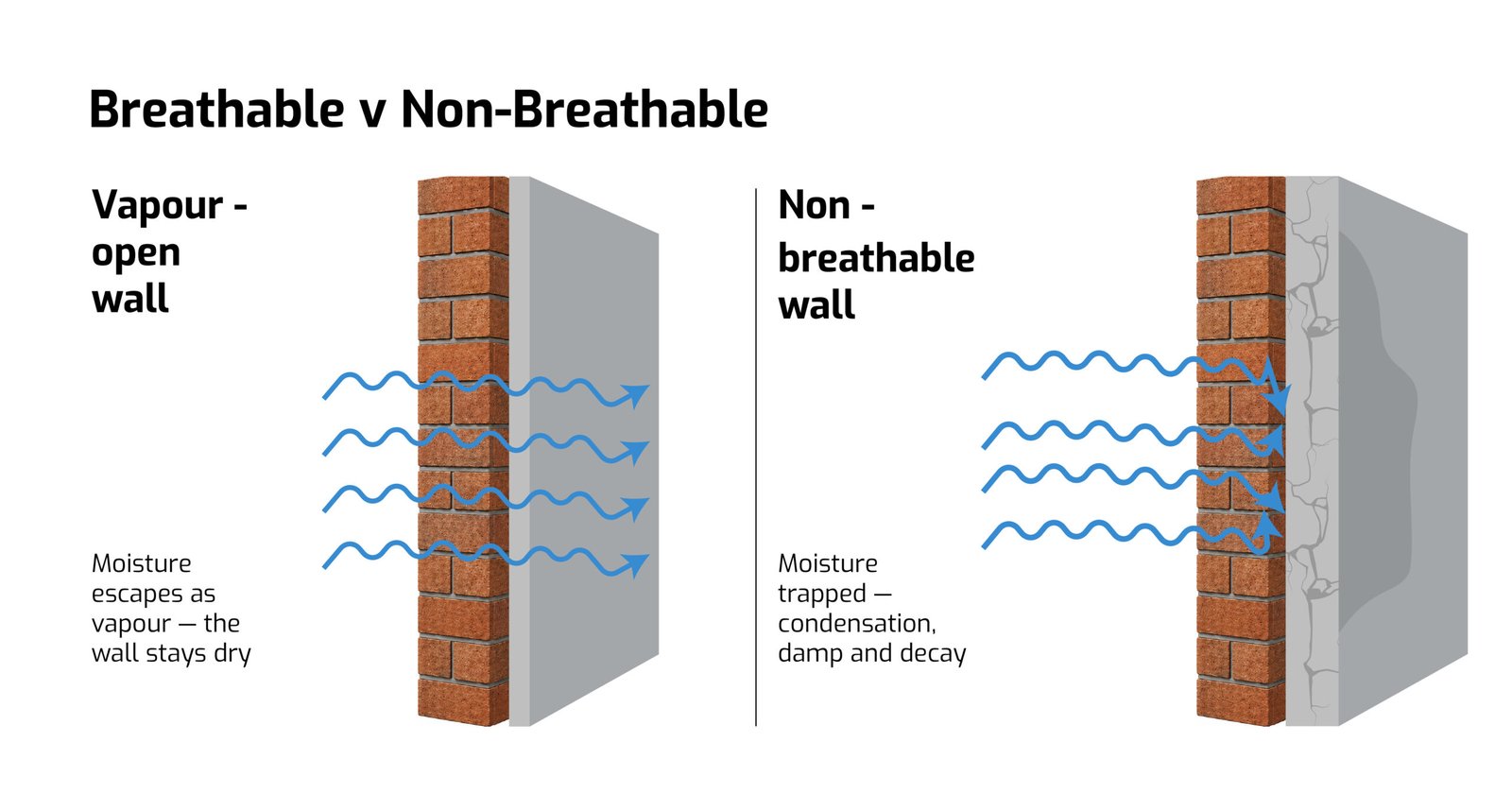
Wrapping a building with non-breathable insulation can cause problems. A warmer interior carries more moisture in the air, and if that moisture cannot move through the wall, it accumulates, condenses and causes damp.
ThermoSilicone and ProofTherm are both formulated from highly vapour-permeable expanded perlite. They allow moisture vapour to pass through the wall and escape to the outside — so existing damp walls dry out over time, and the insulation layer does not create new moisture problems.

We visit your property at no cost. Our surveyor assesses the wall construction, existing render or plaster condition, and any damp or thermal issues. You receive a clear recommendation and a fixed price quote before we leave.
Good preparation is essential. We ensure surfaces are sound, free of dust, oil and contaminants. Where existing render or plaster is failing, it is removed. Windows and doors are protected. Any existing damp issues are assessed — if penetrating damp is present, it must be addressed before the insulating system is applied.
Uni Primer is applied first to stabilise the substrate and ensure optimal adhesion. ProofTherm insulating base coat is then applied at 20–25mm. For the external ThermoSilicone system, ProofBond emulsion primer is applied once the base coat is dry, followed by the silicone finish coat in the selected colour. For internal applications, a skim or decorative coat is applied over the cured ProofTherm.
On completion, the installation is registered with Proofshield and the 15-year materials and workmanship warranty is issued in writing.
Book a free, no-obligation survey. We will visit your property, assess your walls, and tell you exactly which Proofshield system is right for you — and what it will cost. No pressure, no hard sell.